Tuesday, November 27, 2018

Popular Android Apps Like Clean Master Reportedly Caught Committing 'Ad Fraud'

Popular Android Apps Like Clean Master Reportedly Caught Committing 'Ad Fraud'
Two Chinese app developers could have stolen millions of dollars as a part of the ad fraud scheme

HIGHLIGHTS

  • Google Play Store apps have been found to be engaging in ad fraud
  • 8 apps with over 2 billion downloads are said to be a part of the scheme
  • They are said to have been exploiting user permissions

  • A number of Android apps developed by two popular Chinese developers have been found to be involved in an ad fraud scheme. An app analytics firm discovered that eight apps on Google Play Store with more than two billion downloads have been exploiting user permissions to steal "millions of dollars". Seven of these apps come from Cheetah Mobile, a Chinese internet company, while the other one has been developed by Kika Tech, another Chinese firm. These apps reportedly boast of over 700 million monthly active users.
    As per app analytics firm Kochava, which shared its report with Buzzfeed News, the two firms have been misusing app permissions in order to monitor new downloads and then used the data to claim credit for having caused the download. The report explains that the ad fraud scheme exploits the fact that several app developers pay a bounty ranging from 50 cents (roughly Rs. 35) to $3 (roughly Rs. 200) to partners that help them get more installations of their apps. Cheetah and Kika have essentially been using click flooding and click injection techniques to get app-install bounties even without playing any role in app installations.
    The apps developed by Cheetah include Clean Master, CM File Manager, CM Launcher 3D, Security Master, Battery Doctor, CM Locker, and Cheetah Keyboard. As per data from AppBrain analytics service, these Android apps are quite popular since they were downloaded more than 20 million times in the last 30 days itself. It is interesting to note that Google had promoted the CM Launcher 3D app as one of Google Play's "go-to apps"
    Meanwhile, the other app named as a part of the ad fraud scheme is the Kika Keyboard. It is reportedly Google Play Store's most popular keyboard app with over 60 million monthly active users. These apps reportedly ask users to provide a plethora of permissions, including the ability to track keystrokes or other downloaded apps.
    Kika Tech CEO Bill Hu, in a statement to BuzzFeed News, said that the ad fraud took place "without the company's full knowledge." He added that the company is internally investigating the issue and will "rectify the situation" in case "code has been placed inside our product". Meanwhile, Cheetah Mobile also issued a statement to BuzzFeed News suggesting that third-party software development kits (SDKs) integrated into its apps were responsible for the click injection. "We request ads via SDK from these ad platforms and display their ads. We have no control over the behaviour of these SDKs," the company was quoted as saying.
    The latest report comes less than a month after an investigation had uncovered that over 125 Android apps were using a system of bots and shell companies to steal ad revenue. The report had resulted in Google removing several apps from its Play store, Also, recently the company pulled 13 apps containing malware that were downloaded half a million times. Coming to the latest issue involving Cheetah Mobile and Kika Tech, Google has told BuzzFeed News that it is still investigating.

How to create Blogspot!!!earn money by making Blogger #NewTrick2018

How to create Blogspot!!!earn money by making Blogger #NewTrick2018

Wednesday, November 21, 2018

Xiaomi Mi Max और Xiaomi Mi Max Prime के लिए मीयूआई 10 ग्लोबल स्टेबल रॉम अपडेट जारी

Xiaomi Mi Max और Xiaomi Mi Max Prime के लिए मीयूआई 10 ग्लोबल स्टेबल रॉम अपडेट जारी

ख़ास बातें

  • मीयूआई 10 में एआई आधारित पोर्ट्रेट मोड भी है
  • दोनों हैंडसेट को लेटेस्ट मीयूआई फीचर मिलेंगे
  • Recovery ROM या Fastboot ROM तरीके भी हैं अपडेट के लिए
Xiaomi Mi Max और Mi Max Prime स्मार्टफोन को मीयूआई 10 मिलने लगा है। Xiaomi ने इन दोनों स्मार्टफोन के लिए MIUI 10 Global Stable ROM रोलआउट कर दिया है। इन्हें क्रमशः 10.1.1.0.NBCMIFI और 10.1.1.0.NBDMIFI वर्ज़न अपडेट के तौर पर मिल रहा है। गौर करने वाली बात है कि Xiaomi ने हाल ही में Redmi 5, Redmi 5A, Redmi Note 4 और Redmi 6 Pro स्मार्टफोन के लिए भारत में मीयूआई 10 ग्लोबल स्टेबल अपडेट जारी किया था। ध्यान रहे कि कंपनी ने रिकवरी और फास्टबूट रॉम के लिए डाउनलोड लिंक भी जारी किया है। अगर आप अपडेट आने का इंतज़ार नहीं कर सकते हैं तो अपने हैंडसेट को फ्लैश करके इस अपडेट को इंस्टॉल कर सकते हैं।

Mi India फोरम पर एक पोस्ट में शाओमी ने जानकारी दी कि MIUI 10 Global Stable ROM को शाओमी मी मैक्स और शाओमी मी मैक्स प्राइम के लिए रोलआउट कर दिया गया है। आधिकारिक चेंजलॉग से साफ है कि इन दोनों हैंडसेट को लेटेस्ट मीयूआई फीचर मिलेंगे। इस अपडेट के बाद हैंडसेट को फुल स्क्रीन गेस्चर्स, नया यूआई, नेचुरल साउंड सिस्टम, एआई प्री-लोडिंग और फ्रंट कैमरे के लिए पोर्ट्रेट मोड जैसे फीचर मिल जाएंगे।

मीयूआई 10 में एआई आधारित पोर्ट्रेट मोड भी है जिसकी मदद से पोर्ट्रेट शॉट में ब्लैकग्राउंड को ब्लर किया जा सकता है। यह सॉफ्टवेयर के ज़रिए संभव होगा। इसके अतिरिक्त MIUI 10 अपडेट में Xiaomi ने क्लॉक और नोट्स ऐप को भी अपडेट कर दिया है। इन बदलाव के अलावा लेटेस्ट ओएस कई इंप्रूवमेंट और ऑप्टिमाइज़ेशन भी लेकर आता है।

अपने Mi Max और Mi Max Prime हैंडसेट में मीयूआई 10 की उपलब्धता जांचने के लिए आपको Settings > About phone > System updates > Check for updates में जाना होगा। जैसा कि हमने आपको पहले बताया, अगर आप अपने शाओमी मी मैक्स और शाओमी मी मैक्स प्राइम हैंडसेट में अपडेट का इंतज़ार नहीं कर सकते हैं तो Recovery ROM या Fastboot ROM तरीके भी हैं।

Sunday, November 4, 2018

How to Fling Plex Content From iOS or Android to Other Devices

How to Fling Plex Content From iOS or Android to Other Devices


Introduction

Plex gives users the ability to take content they are watching on one device and fling it to another device to continue watching it. For example, maybe you start watching a movie on your smartphone while your kids are watching their shows on the TV in the family room. After the kids go to bed you can open the Plex app on a number of supported devices, choose to fling the content you were watching to a Plex app on the larger TV, and pick up right where you left off on the larger screen. Another scenario is where you want to show off pictures on your Plex Media Server to a larger group. Using the Fling functionality, you can instantly display images from that library through another Plex app on a larger device that can be displayed to the larger group of people. Plex makes it possible to fling content to and from almost all devices Plex is available on, including Apple TV, Amazon Fire TV, iOS, Android, PlayStation 4, Xbox One, Roku, TiVo, Windows and Windows Phone, and more.
The ability to fling content from one Plex device to another is only available with a Plex Pass.


The ability to fling content from one Plex device to another is only available with a Plex Pass. | Source

Process for Flinging Content to Another Plex Device

  1. Open the Plex app on your iOS or Android device, and start looking at or watching any piece of content in your Plex library. This can include looking at pictures, listening to music, or watching videos.
  2. Tap the "Fling" icon in the upper-right corner of your iOS or Android device. The Fling icon looks like a rectangle with a small wireless icon in the lower left corner. The Choose a Player screen appears on your smart device with a list of all devices that are either on the same network as your Plex Media Server that are actively running Plex apps, or devices that are capable of playing audio associated with your Plex content, such as Google Home.
  3. Tap the connected device running a Plex app that you want to fling the content to. A message appears on the iOS or Android device you're flinging content from asking if you want to continue playback from your current device on the device you selected.
  4. Tap "Yes." Any Plex content currently playing on that device will be turned off, and the content you opted to fling to the other device loads and starts playing on that device. The Choose a Player screen closes and you're returned to a screen that shows you an image of the content you're playing. Also, the Fling icon in your iOS or Android app will turn orange, which indicates that you are flinging content to a Plex app on another device. If you are watching a movie or listening to music, the movie or music will pick up playing on the new device where it left off on the iOS or Android device. If you fling a photo to the new device, it will start playing in a slideshow with other photos from that same library. Additionally, you can still use the volume and other controls in your iOS or Android app to control the content you are flinging to another device. For example, you can fast forward and rewind a movie, skip to the next song in an album, or move between pictures in your photo library.


Saturday, November 3, 2018

Android Version Names: Every Os From Cupcake to Android P

Android Version Names: Every Os From Cupcake to Android P


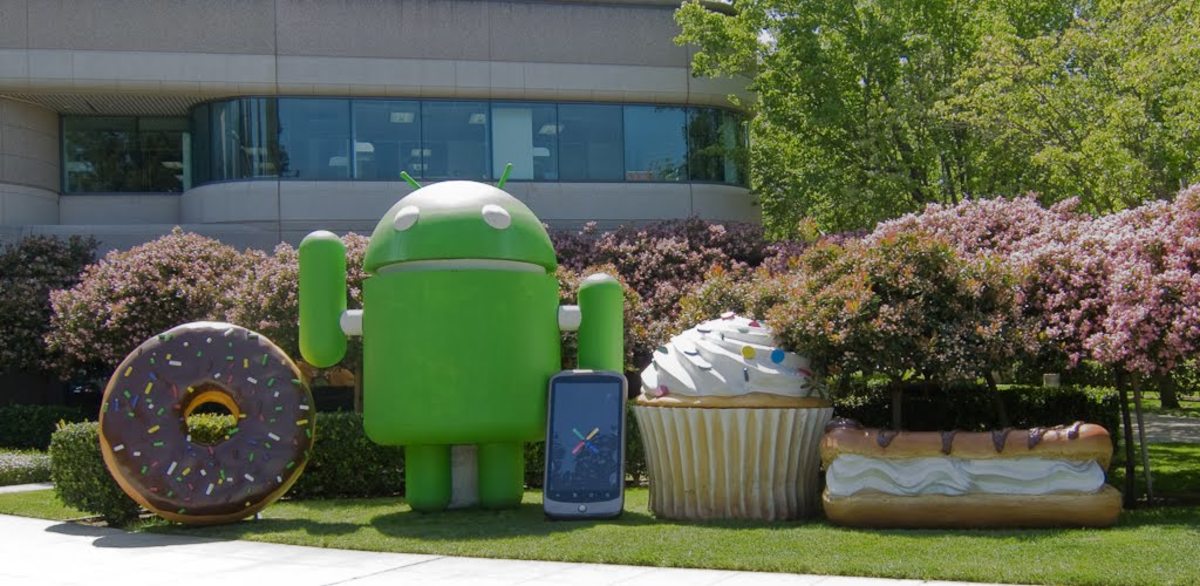
The Mascots on Google Campus, from left to right: Donut, Android (and Nexus One), Cupcake, and Eclair


Android and Dessert Names

Google's Android division certainly has a sense of humor: It named all of its version codenames after desserts (just as Intel names all of its CPUs after rivers). To celebrate a new version, a giant mock-up of the dessert that matches the codename is usually delivered to the Google Campus and put on display.
So what are the different versions of Android OS and the desserts associated with them? Let us go over a short history.

Android 1.0 and 1.1: Unnamed, and "Petit Four"?

There appears to be no codename assigned to versions 1.0 Android OS.
Google bought a company called Android back in July 2005. Android was headed by several mobile big shots, including the former head of a big carrier, ex-owner of a phone maker, and more. After their buyout, Android went into stealth mode, and rumors spread that Google was working on a mobile phone.
The dam finally broke in November 2007, when Google suddenly announced that they were indeed working on a phone (Google Phone). More than that, they were also working on a brand-new mobile operating system called Android, based on the Linux kernel, to be used by the Open Handset Alliance, a group of 65 different hardware makers, carriers, and other mobile-related companies.
HTC was the first phone maker to get a real consumer phone out, the T-Mobile G1 (also known as the HTC Dream outside of US), on October 2008.
An update of Android, version 1.1, was released in February 2009. According to Android Police, this version was officially named "Petit Four", but since it was rarely seen, the name was also rarely mentioned.
The first significant version of Android OS that really showcased the power of the platform was V1.5, codenamed "Cupcake." As Cupcake starts with letter "C", many have suspected that 1.0 had a codename starting with "A" and 1.1 had one starting with "B," but no actual codenames were ever assigned. Someone assumed that an earlier mention of "Astro" and "Bender" by Android engineers in early talks referred to these two versions, but they denied so in the Android Police article linked above.

Android 1.5: Cupcake

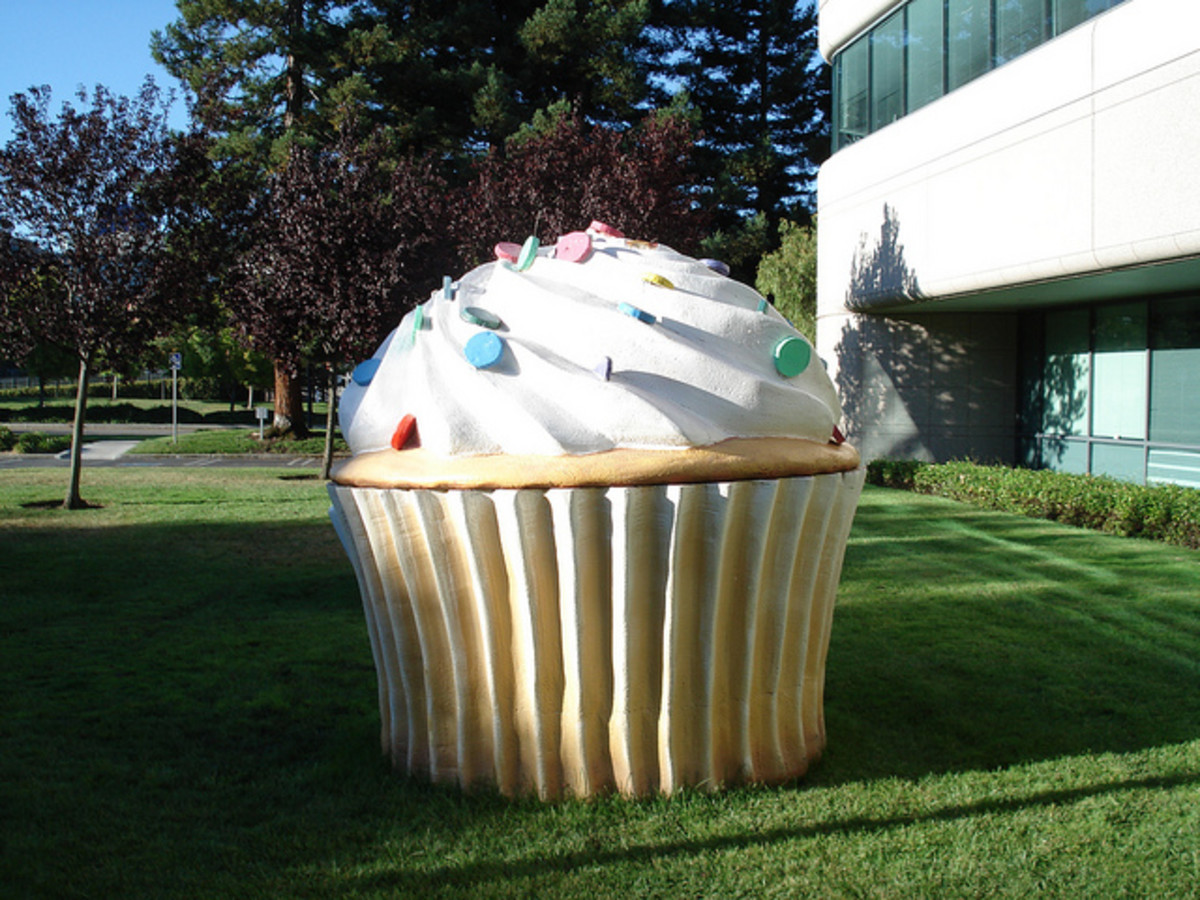
The Android cupcake on Google's campus


The Android cupcake on Google's campus | Source


Technically Android 1.5 wasn't the first version, but versions before it don't seem to have received any codenames. Stories were told that it was supposed to be version 1.2, but Google decided to make it a major revision and made it 1.5 instead. Among the many changes with Cupcake, third-party keyboard and Widgets were enabled and phone could upload directly to YouTube and Picasa. The company codenamed the version "cupcake," which is how the trend of dessert names began.
A cupcake is a small, individually-sized cake baked in a cup-shaped mold. It is usually served with frosting on top.

Android 1.6: Donut

The Android donut on Google's campus
The Android donut on Google's campus | Source
Android V1.6, codenamed "Donut," was released in September 2009. It fixed reboot errors in the OS, revamped photo and video features (i.e. camera interface), and featured better search integration. It also added support for larger screen sizes and is the first version to offer Google's turn-by-turn navigation feature.
A donut is a small ring-shaped friedcake. The ring is made of rich, light dough and deep-fried. Various sweet coatings can be added. Donuts are not to be mistaken for bagels, which are baked, much denser, and usually salty.

Android 2.0 and 2.1: Eclair

The Android eclair on Google's campus
The Android eclair on Google's campus | Source
Android 2.0 was released in October 2009, with a bugfix version (2.0.1) coming out in December 2009. Android 2.1 was released January of 2010. Most people consider them a single release. Added features include Bluetooth 2.1 support, flash and digital zoom for the camera, multi-touch support, live wallpapers, and more.
Eclairs are usually described as oblong cream puffs. They are baked pastries with cream filling and chocolate coating on top.

Android 2.2: Froyo

The Android froyo on Google's campus
The Android froyo on Google's campus | Source
Android 2.2 mainly improved speed by adopting the Javascript "just-in-time" compiler engine from Google's browser, Chrome. It also improved browser support by adding animated GIF support and Flash 10.1 plug-in support, along with USB tethering and Wi-Fi Hotspot capability (for those with supporting hardware).
Froyo is short for "frozen yogurt." It is a frozen dessert made from yogurt, so it is slightly more sour than soft serve, but also lower in fat.

Android 2.3, 2.4: Gingerbread

The Android gingerbread man on Google's campus
The Android gingerbread man on Google's campus | Source
Gingerbread was officially released in December 2010.
On December 6th, 2010, Google officially announced the first phone with Android OS 2.3 Gingerbread. The phone was the Nexus S, which Google co-developed with Samsung. The phone was originally only available for T-Mobile, but was later made for Sprint and AT&T as well.
Gingerbread supports SIP internet calling, NFC wireless transaction capability (if hardware is present), more than one camera, and gyroscopes and other sensors (barometers, gravimeters, and others are possible). It also features a download manager, some tweaks to allow usage on Tablets, and other system level tweaks for programmers.
As a dessert, gingerbread is basically a ginger-flavored cookie. It is often made to celebrate end-of-year holidays in the US. The cookies are cut into festive shapes—often the shape of a man—and decorated with icing and candy.

Android 2.4: Still Gingerbread

A version of Android 2.4 was found on Sony Ericssen Xperia Arc at CES 2011. The phone maker claims wrong version, but later Google source confirmed that "Ice Cream" will be announced at Google I/O event in May 2011 and released June or July 2011.
Well, 2.4 being Ice Cream doesn't make sense, as it violates the existing order, as the dessert names are in alphabetical order, and I is after H, not before. It does make sense to make it after Honeycomb (3.0)

Android 3.0, 3.1, and 3.2: Honeycomb

The Android honeycomb on Google's campus
The Android honeycomb on Google's campus | Source
Honeycomb was released in February 2011, and was rapidly followed by 3.1 and 3.2 in July and August of 2011. Google posted a lot of previews and highlights on Honeycomb.
Honeycomb was made for tablets, which implied that Android OS 2.X was not. That did not stop Samsung and a slew of smaller manufacturers from putting out an army of Android 2.X tablets of various sizes before the end of 2010 as they tried to ride the wave of the iPad's success in time for the Christmas shopping season.
Motorola Xoom was the first Android 3.X tablet to be released. It has since been followed by many others.
Dessert-wise, honeycomb is a sheet of hexagonal cells bees build out of wax and fill with honey. Fresh honeycomb can be consumed as a dessert—some people chew or even consume the wax with the honey.

Android 4.0: Ice Cream Sandwich

The Android ice cream sandwich on Google's campus
The Android ice cream sandwich on Google's campus | Source
Ice Cream Sandwich was Google's attempt to synthesize Honeycomb, it's tablet-only platform, with its mobile platform. Released in October 2011, it featured a new design and default font, as well as the ability to monitor and limit mobile data usage and other upgrades. Many devices were slow to adopt Ice Cream Sandwich. Three months after Ice Cream Sandwich, only one phone (Samsung Galaxy Nexus) had been released to run it.
In real life, an ice cream sandwich is a layer of ice cream, usually vanilla, sandwiched between two cookies, usually chocolate. They are often rectangular in shape.

Android 4.1: Jelly Bean

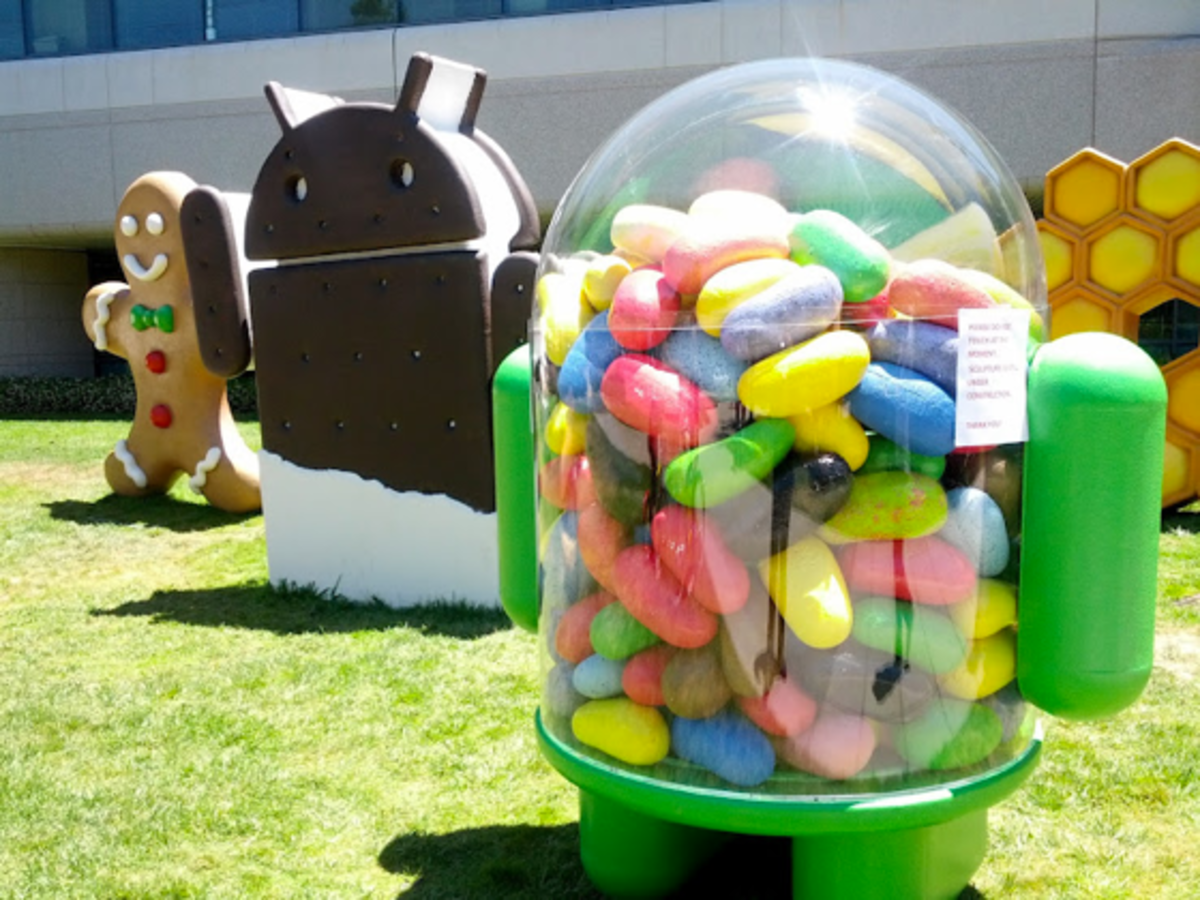
The JellyBean mascot on Google's campus
Jelly Bean came out in 2012. Biggest changes included "Google Now," an AI assistant that anticipates your needs and better, more interactive notifications. Jelly Bean also allows "voice typing," a built-in speech-to-text engine that does not rely on Internet or data.

Android 4.4: KitKat

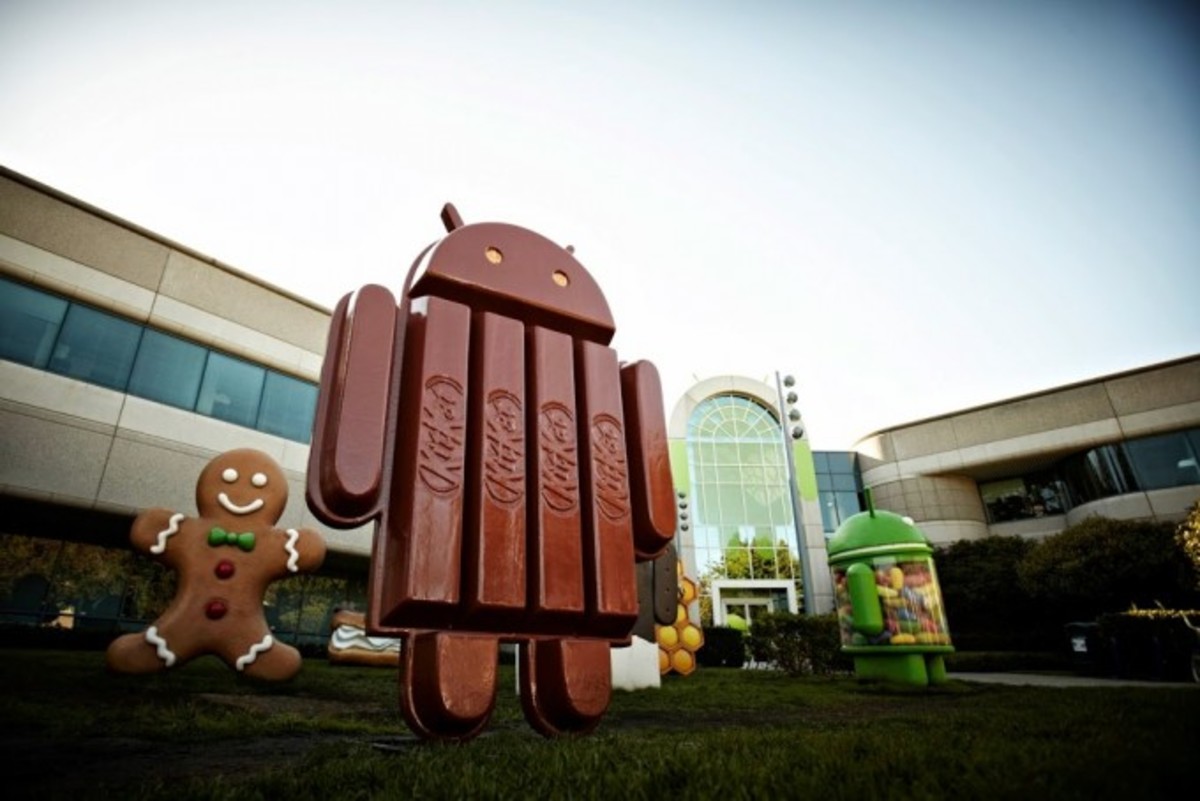
The Android 4.4 KitKat mascot on Google Campus
The Android 4.4 KitKat mascot on Google Campus | Source
Google announced that Android 4.4 would be named KitKat on September 3, 2013. KitKat's parent company, Nestlé, was fully on board with the naming of operating system and launched an advertising campaign during KitKat's release. As part of the campaign, specially marked packages of Kitkat with Andy the Green Android on the package each contained a sweepstakes code that could win a new Nexus 7 Android tablet or Google Play store credit.
KitKat took the Google Now feature and took it a step further with "Ok Google." Ok Google allows people to access Google Now without even touching their phones—just verbally saying the phrase opens up the artificial intelligence assistant. KitKat also introduced Emoji to Google's keyboard.

Android 5.X: Lollipop

The Android lollipop on Google's campus
The Android lollipop on Google's campus | Source
Android 5 is called Lollipop, and it featured a brand new runtime called ART that no longer relies on the older DALVIK runtime (which is somewhat based on Sun/Oracle specs). Lollipop also contains other UI improvements and has an excellent battery life on some devices.
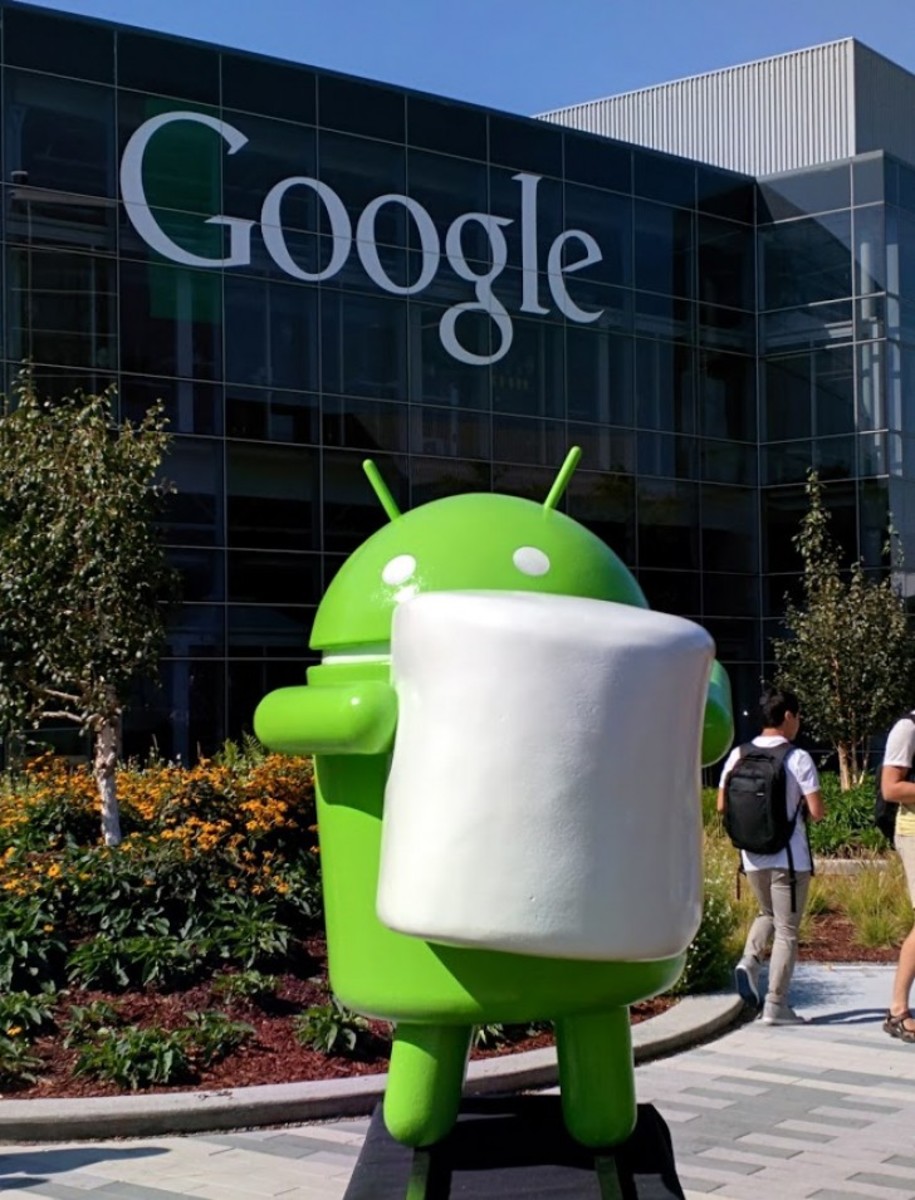
Android 6: Marshmallow mascot on Google Campus

Android 6.X: Marshmallow

Android 6: Marshmallow is already out for the Nexus devices and is believed to be coming soon to all flagship devices before end of the year, and to other devices by mid 2016.
Marshmallow introduced several changes that can have significant impact. App permission model is now opt-in (grant specific permission as requested) rather than opt-out (all is permitted, then use App Ops to run off individual permissions). Doze mode allows the device to go into hibernation when idle, cutting power consumption to virtually nil. Fingerprint sensor support is now baked into the OS rather the vendor support, and USB C is now fully supported. Finally, Marshmallow allows one to format a microSD card and adopt it as if it's internal storage and share the same internal security level.
Google unveil Android 7, Nougat at Google Campus, June 30, 2016
Google unveil Android 7, Nougat at Google Campus, June 30, 2016 | Source

Android 7: Nougat (2016)

Android 7 was officially christened Nougat on June 30, 2016, when the latest lawn status was revealed amidst fanfare (see photo). It is armed with a new Just-In-Time compiler based on the ART engine, Unicode 9.0 Emoji support, and the new Vulkan 3D rendering API. Patches for 7.1, 7.1.1, and 7.1.2 followed in 2017.
Android Oreo lawn statue, just before debut on Google campus
Android Oreo lawn statue, just before debut on Google campus | Source

Android 8: Oreo (2017)

Android 8, named Oreo after the famous cookie, was released in Q3 of 2017. Its major change was "Project Treble", where it made the OS more modular so OS upgrades can be released faster by the manufacturers. Emoji support was updated to Unicode 10, with improved notifications framework multiple display support, and other features. It was quickly followed by 8.1 in December 2017 with an "Oreo Go Edition" for low-end devices as well as improved API for several internal functions.

Android 9: P (2018?)

Nothing is known about the final name for Android 9.0 other than it will begin with letter P. A preview of such was made available by Google in June 2018

Where Is the Latest Operating System for My Phone?

The problem with Android OS is each phone maker and/or carrier can customize the phone, and those tweaks mean each carrier/maker will need to retest the OS completely before it can be released. The process often takes several months, and ExtremeTech does a great job of explaining why.
Even then, it is not guaranteed that your device can be updated to the latest version of Android OS. Devices that came with V1.5 (Cupcake) or V1.6 (Donut) can be upgraded to V2.1 or V2.2, but will not fully support all the features of the OS due to hardware limitations. Some examples:
  • Some of the earliest HTC Android phones, such as Legend, Desire, and Hero, do not support live wallpapers even when upgraded to Eclair (2.1) or later.
  • The original Google phone, the T-Mobile G1 (HTC Dream) only officially received the V1.5 or V1.6 updates. Some have developed later Android OS ROMs for the phone, but they require the phone to be rooted to use.
  • Motorola Droid, even when upgraded to Froyo (2.2), does not support mobile hotspot.
In general, you will need to wait for the carrier to release the OTA (over-the-air) updates or wait for a ROM developer, such as Cyanogen, to get a ROM version working for your phone.
The way the process works is Google has to release the SDK and ROM for the latest OS. Then each carrier and phone maker will go off and test it on their phones, add any local improvements, and eventually release it over the air and push it to your phone. The process takes several months.
Android OS itself don't have any hard requirements, but there are some practical ones. I would expect a device with 512 MB of RAM and 1 GHz CPU to run Gingerbread, but anything less may be problematic. For Lollipop and Marshmallow you'd expect at least a quadcore with 2 GB of RAM, if not the latest octo-core with 3 or 4GB of RAM. The recommended device specs will only go up with future Android operating systems.

What Is AOSP ROM vs. Factory ROM?

AOSP, or Android Open Source Project, is the source of all actual Android code that is open source. While Google did develop and is still developing Android, it periodically releases bug fixes and new versions to AOSP to continue its development. However, AOSP versions of ROM are a very generic ROM and need to be customized for different hardware implementations. You can't just download AOSP stuff into your device and expect it to run.
Thus, many ROM developers take AOSP code, customize it to their purposes, specialize it for one platform/device, and voilà, AOSP-based ROM. Not all features may be supported by AOSP ROM as some hardware does not have open source support.
A factory ROM, on the other hand, is based on the original firmware from the manufacturer. It is basically a tweaked version of the original ROM, probably with bloatware stripped out and tuned for maximum performance. This is only possible if the manufacturer has actually released such a ROM.
For example, to get Jelly Bean on an older phone, such as Motorola Droid Bionic (aka Targa), one can take the official Motorola 4.1 Jelly Bean update, then load one of the tweaked ROMs based on it. Or one can just Cyanogen Mod 10.1, which is based on AOSP. CM10.1 doesn't have nav dock or lap dock support, as those are proprietary to Motorola with no open source support, but it has variety of other features not available on the factory or tweaked ROMs.


Wednesday, October 31, 2018

Govt asks Google, Facebook, WhatsApp to check rumours, messages inciting unrest

Govt asks Google, Facebook, WhatsApp to check rumours, messages inciting unrest

The meeting, which took place on Wednesday, was called to review actions taken so far to prevent misuse of social media sites by undesirable elements or miscreants to spread rumours, cause unrest, incite cyber crimes especially against women and children and other activities detrimental to national interest.


Google,Twitter,WhatsApp
The meeting was attended by representatives of Facebook, Google, Twitter, Whatsapp, YouTube and Instagram as well as officials from the Department of Telecom and various security agencies.(AFP)


Government has asked Google, Twitter, WhatsApp and other social media platforms to take concrete steps to check spread of rumours and messages inciting unrest, cyber crimes and other activities that could be detrimental to the national security, officials said Thursday.
Besides, these platforms, which also include Facebook and Instagram, have also been asked to put in place a system for prompt sharing of information sought by the law enforcement agencies for investigation purposes, officials added.
A number of cases have come to the fore in recent past where social media platforms were used to spread hate messages and rumours inciting violence, including against women, but internet giants -- most of them being headquartered outside India -- have been resisting sharing of customer details and message trails citing privacy issues. However, some social media firms have said they are taking necessary steps to stop misuse of their platforms for spread of fake news, and rumours and hate messages.
In a meeting with asked representatives of various social media platforms, Union Home Secretary Rajiv Gauba also asked them to nominate India-based grievance redressal officers and to develop a monitoring mechanism for time-bound preventive and other actions for removal of objectionable contents.
“The union home secretary asked them to take concrete steps to ensure a robust and effective system for preventing misuse of their platforms for activities detrimental to national security,” a home ministry official said.
Those who attended the meeting included representatives of Facebook, Google, Twitter, Whatsapp, YouTube and Instagram. Besides, officials from the Department of Telecom and various security agencies were also present. The meeting, which took place on Wednesday, was called to review actions taken so far to prevent misuse of social media sites by undesirable elements or miscreants to spread rumours, cause unrest, incite cyber crimes especially against women and children and other activities detrimental to national interest.
The representatives of social media platforms briefed the government officials about actions taken by them to ensure blocking of websites and for removal of objectionable and malicious contents from public view.
All social media platforms have assured full cooperation with the government, another official said.
Since a review meet held by the union home secretary with social media representatives in June this year, a series of meetings has taken place with law enforcement agencies and social media firms to ensure an effective mechanism to prevent misuse of these platforms by anti-national elements and those involved in proliferation of child sexually abuse material etc.

Focused on security, privacy to help users communicate in everyday life: WhatsApp

Focused on security, privacy to help users communicate in everyday life: WhatsApp

WhatsApp also announced its partnership with Invest India to help entrepreneurs and small and medium enterprises expand their businesses.


WhatsApp Vice President Chris Daniels Wednesday said the company is focussed on values like security and privacy to ensure that its product remains a utility that helps users communicate in everyday life.
The Facebook-owned company, which has been asked by the Indian government to put in place a mechanism to clamp down fake messages on its platform, also announced its partnership with Invest India to help entrepreneurs and small and medium enterprises expand their businesses.
“...we keep the company focused on four values -- simplicity, quality, security and privacy. Everything we do in the company focusses on those values and delivering that value to users and ensuring that our product remains a utility that they can use to communicate in everyday life,” Daniels said.
Out of WhatsApp user base of 1.3 billion people, more than 200 million people are in India -- the single largest market for the popular messaging platform.
The government has been pushing WhatsApp to find a technology solution to trace origin of ‘sinister’ messages, a move that it believes can help curb horrific crimes like mob-lynching emanating from fake news.
WhatsApp, however, had rejected India’s demand for a solution to track the origin of messages on its platform, saying building traceability will undermine end-to-end encryptionand affect privacy protection for users. Emphasising that people use its platform for all kinds of “sensitive conversations”, the US-based firm had said it is focussing on educating people about misinformation.
Speaking about the startup ecosystem in India, Daniels said companies like Ola, Flipkart, Zomato and Makemytrip are making a huge impact on the Indian economy.
“We are extremely impressed by the entrepreneurial tradition in India as well as by companies that we see coming out...We believe in people, we believe in creativity, we believe in entrepreneurship,” he said.
WhatsApp and SMEs in India
The partnership with Invest India will help WhatsApp in driving awareness about its business tools in around 15 states impacting over 60,000 businesses in the coming months through tools such as Startup India ‘Yatra’ programme and other in-person training events.
WhatsApp will invest $250,000 as seed funding to the top 5 winners of the ‘WhatsApp StartUp Challenge’ and an additional $250,000 will be directed to a select few from the entrepreneurial community to promote their WhatsApp business number on Facebook and drive discovery of their businesses.
“India adds over 3 new startups a day, ranking it amongst the top startup nations in the world... Through this partnership with WhatsApp, we aim to support the innovative startups in India and to create solutions not only for India but the entire world,” Deepak Bagla, CEO and MD at Invest India, said.
Department of Industrial Policy and Promotion (DIPP) Secretary Ramesh Abhishek said DIPP is working with the tax department and regulators to ease the rules and laws for startups to support budding entrepreneurs.

Tuesday, October 30, 2018

China’s OnePlus set to foray into Indian smart TV market

China’s OnePlus set to foray into Indian smart TV market

Chinese handset maker OnePlus had recently announced the formation of a new division to develop Smart TVs, which will be spearheaded by OnePlus founder and CEO Pete Lau.
Image result for oneplus smart tv

Consumers of India’s growing segment of Smart TVs can expect even better times going forward with China;s OnePlus set to enter the market, intensifying competition in a space which has already been disrupted by the entry of Xiaomi, another Chinese player.

OnePlus co-founder Carl Pei told ET that the positioning of TVs has to be the flagship and India will be one of the first markets to get them. "We are good at the flagship segment and user experience.”

Chinese handset maker OnePlus had recently announced the formation of a new division to develop Smart TVs, which will be spearheaded by OnePlus founder and CEO Pete Lau.

The executive said India is a big market, and allows space for multiple companies in the TV space.


Image result for oneplus smart tv


“The market is big. There are different segments…while we haven't revealed our product rollout plans, the positioning of TVs has to be the flagship… There is still a lot of work that could be done in terms of user experience,” Pei said.

“We will be able to carve out a space for ourselves in India,” he said.

India's television market is valued at Rs 22,000 crore, growing at 15% a year, with the Smart TV segment a small, but fast growing one. The market recently saw the entry of hardcore smartphone makers such as Xiaomi, Micromax, Intex and other newer brands like Kodak, Thomson, Blaupunkt, Skyworth and TCL.

Xiaomi’s TV has become the top “Smart TV” brand in India in the second quarter of 2018, as per IDC.

“We are very conservative when it comes to new categories. For us, we think Smart TV will be the next big category. We believe this will really replace the smartphone in the coming couple of years,” he said.

OnePlus is launching its latest flagship OnePlus 6T in India and in the US market to further consolidate its presence in the premium segment.

Pei said that the premium segment is still small in India, but is growing fast, and the company is “happy” with its performance. “…consumers now want better products and have disposable income…we just want to focus on what we do best… we are now offering a meaningful upgrade through new phone,” he said. OnePlus maintained its leadership position in India's premium smartphone market in the July-September quarter of this year with 30% market share, driven by strong sales of OnePlus 6 smartphone, as per Counterpoint data.

India is profitable and contributes around one-third of the global revenue for OnePlus. “This year, India is also similar to last year in terms of overall share, which is one-third. But, the entire pie has grown since last year, which means India as a market has grown.”

OnePlus is aggressively investing in India to set up a local research and development (R&D) centre here, and to fuel its offline expansion.

“The new centre will help us work closely with partners, and bring it closer to the users. It will help in localisation and innovation for the local market,” Pei said.

OnePlus is also rolling out its own service infrastructure to have a tighter control over its operations, and is also bringing global contact service operations to India to support markets such as the US and Europe.

Popular Android Apps Like Clean Master Reportedly Caught Committing 'Ad Fraud'

Popular Android Apps Like Clean Master Reportedly Caught Committing 'Ad Fraud' Two Chinese app developers could have stolen mill...